
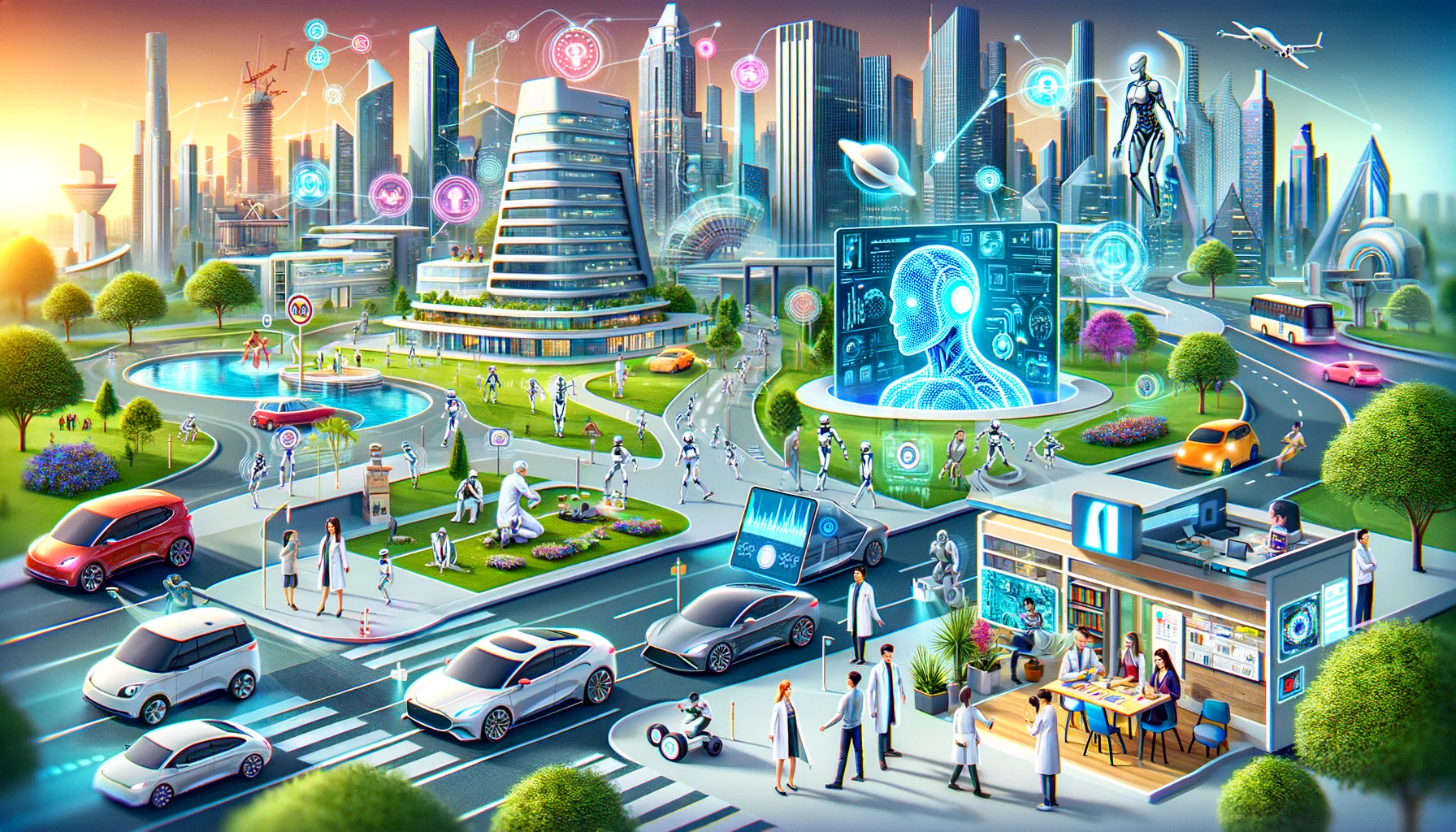
With the accelerating pace of advancements in artificial intelligence, the future is being reshaped significantly. AI models like ChatGPT-4o promise substantial achievements across various fields of life, but these advancements also come with new challenges. Here are some key predictions for the future of the world with the progress of these models:
1. Significant Transformations in the Job Market
As AI advances, many current jobs will be automated, leading to the loss of some traditional jobs that rely on routine tasks. However, many new opportunities will emerge in fields like programming, intelligent systems management, and data analysis. Technical and analytical skills will become increasingly important, requiring the workforce to adapt and undergo continuous training.
2. Revolutionary Developments in Healthcare
AI models will revolutionize healthcare by improving medical diagnostics and providing personalized treatment plans. AI can analyze vast amounts of medical data quickly and accurately, helping to detect diseases in their early stages and improve treatment outcomes. Additionally, robots will assist in performing surgeries with greater precision and reduced risk.
3. Enhancing Quality of Life
AI applications will enhance quality of life through smart homes and self-driving cars. Homes will become more energy-efficient, safer, and more comfortable. Self-driving cars will reduce road accidents and improve daily commuting experiences, contributing to reduced traffic congestion and better air quality.
4. New Ethical and Legal Challenges
AI usage will necessitate the development of new regulatory and legal frameworks to address issues of privacy, algorithmic bias, and legal accountability. There will be a critical need to ensure the ethical and responsible use of AI, with clear rules for accountability and transparency.
5. Comprehensive Economic Impact
AI will boost economic growth by increasing productivity and fostering innovation. Companies that adopt AI will be able to improve their operations and reduce costs, enabling them to offer new products and services. However, governments must take steps to ensure fair distribution of the wealth generated by these technologies and reduce the economic gap between countries.
6. Advanced Human-Machine Interaction
AI models' ability to understand natural language and interact in more human-like ways will improve. This will enable the development of customized educational and training tools, enhance customer service, and provide improved user experiences across various sectors. Smart devices will become an integral part of daily life, facilitating many tasks and enhancing efficiency.
7. Stimulating Scientific Research and Education
AI will accelerate scientific discoveries by analyzing data and drawing conclusions faster and more accurately. In education, intelligent systems will help deliver personalized learning experiences tailored to each student's needs and level, enhancing the effectiveness of the educational process and increasing academic success rates.
Conclusion
The future of the world with the rapid development of AI models like ChatGPT-4o holds great promise with many opportunities and challenges. To achieve the desired benefits, societies and governments must develop regulatory policies that ensure the ethical and responsible use of these technologies, focusing on training and education to prepare individuals for the fast-changing job market. In this way, AI can contribute to improving human lives and achieving sustainable progress.