
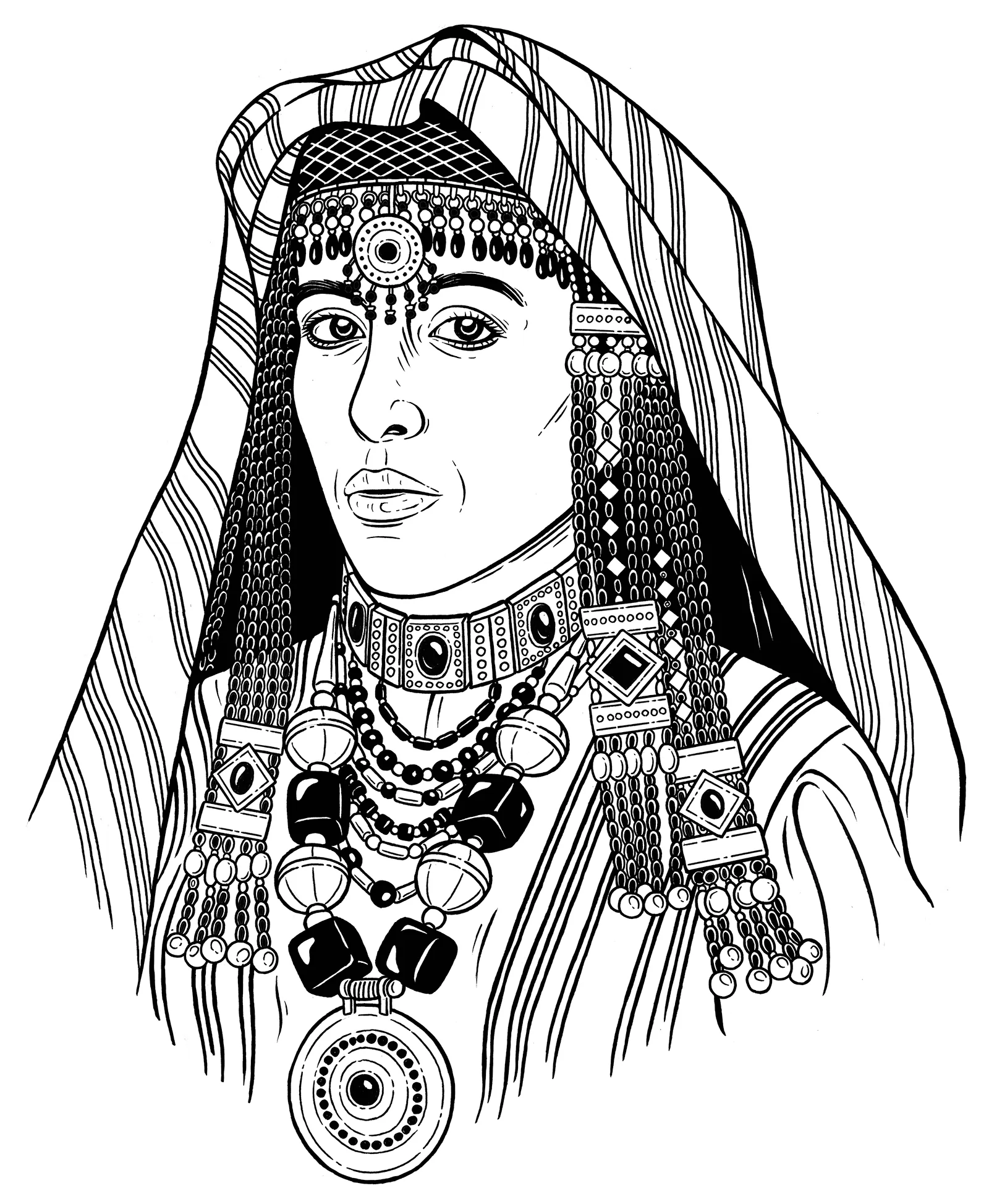
Queen Arwa Al-Sulayhi, also known as Al-Malika Al-Hurra Arwa bint Ahmed, was a powerful ruler in Yemen during the 12th century. She was the queen regnant of the Sulayhid Dynasty and is considered one of the most prominent female leaders in Yemeni and Islamic history.
Arwa inherited the throne after the death of her husband, Ali al-Sulayhi, in 1138. She ruled as a capable and independent queen, leading her kingdom through political and economic stability and expanding its territories in Yemen and the surrounding regions. Arwa was known for her wise rule, benefiting not only her own people but also promoting art, literature, and architecture.
Under Arwa's leadership, Yemen experienced a prosperous era. She developed Sana'a, the capital, as a thriving cultural and intellectual center. Arwa was a patron of scholars, poets, and artists, and her court attracted scholars from across the Islamic world.
Furthermore, Queen Arwa played a significant role in supporting Ismaili Shi'a Islam, which was predominant in her region. She strengthened the Fatimid Caliphate's influence in Yemen and helped establish the Fatimid Imamate in the region.
Queen Arwa's legacy as a strong and successful ruler endures to this day. Her leadership and contributions to Yemeni culture and history are celebrated, and her name is often associated with strength, wisdom, and female empowerment.